- +44 20 80 88 58 88
- info@citihomeswindows.co.uk
- Unit 3, Alpine Business Center, Eastbury Road, London E6 6LP

Menu
Bay Windows
More light, more space, more character.
Bay windows are one of the most defining architectural features of London’s housing stock. From the ground-floor sitting rooms of Victorian terraces in Brixton and Battersea to the imposing Edwardian bay fronts of Chiswick and Finchley, the projecting bay window has shaped the street character of the capital for over 150 years. Beyond their visual impact, bay windows serve a genuine practical purpose – projecting outward from the main wall to bring in more natural light from three directions, create additional interior floor space, and open up wider, more panoramic views than any flat window can provide.
We work with leading manufacturers to supply and install bay windows across London in timber, aluminium, and composite, covering replacement of existing bays and new installations.
What is a bay window?
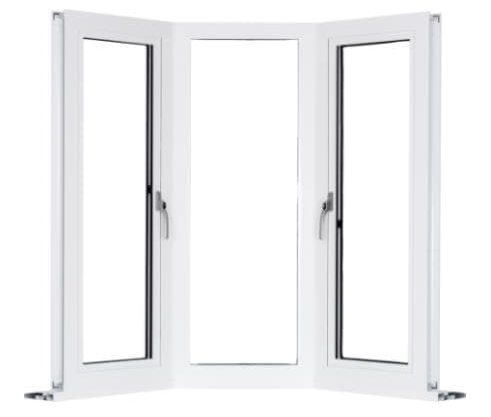
A bay window is a window structure that projects outward from the external wall of a building, typically comprising a wide central panel flanked by two angled side panels. This projection creates a recess or alcove inside the room – the bay itself – which homeowners use for seating, storage, reading nooks, home offices or simply to give a room a greater sense of openness and light.
Bay windows are distinct from bow windows, which use four, five or six panels arranged in a continuous gentle curve rather than at distinct angles. Bay windows have a faceted, geometric appearance that lends itself naturally to the Victorian and Edwardian architecture found across much of London, whilst bow windows tend to suit more formal classical and Georgian facades.
A brief history of bay windows in London
Bay windows first appeared in England during the late 15th century, initially as oriel windows projecting from the upper floors of grand houses, churches and castles. Their widespread adoption came during the Victorian era, following the repeal of the Glass Tax in 1845 and, crucially, the Building Act of 1894 – which permitted windows to project beyond the external wall for the first time. Combined with advances in glass manufacturing that made large-pane glazing affordable for middle-class housing, this triggered a rapid proliferation of bay-fronted terraces and villas that now define enormous stretches of inner and outer London. Today, bay windows remain one of the most sought-after features in the London property market – both as a heritage element in period homes and as a bespoke architectural statement in contemporary new builds and extensions.
Types of bay windows
We supply a full range of bay window configurations suited to different property types, room sizes, and architectural styles:
-
Canted bay windows
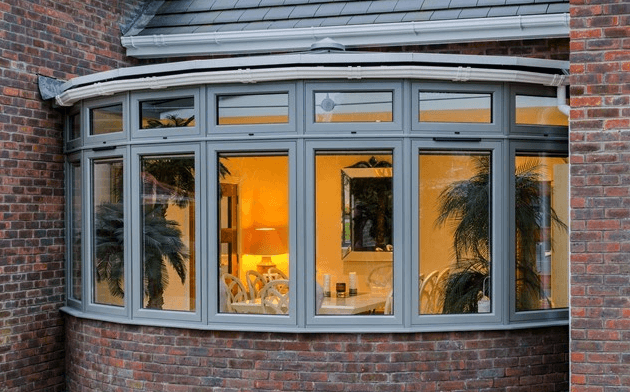
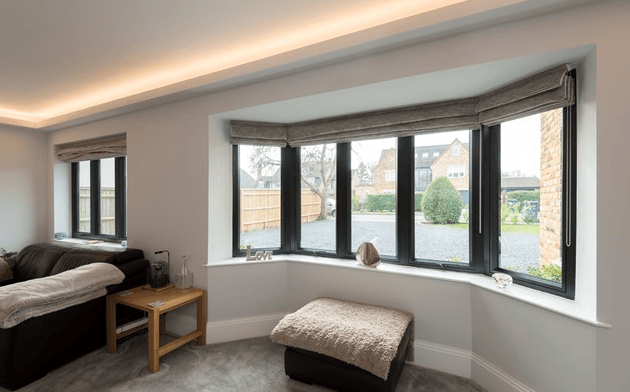
The most common type across London period properties. Side panels are set at 30° or 45° angles to the main wall, creating a faceted, geometric projection. Suits Victorian terraces, Edwardian semis and most traditional properties where the original bay is being replaced like-for-like.
-
Square (box) bay windows
Side panels are set at 90° to the main wall, creating a square or rectangular projection with a flat front. A strong, bold profile popular in Victorian mansion blocks, basement-level rooms and contemporary designs where clean, orthogonal lines are preferred.
-
Bow windows
Curved multi-panel projections using four, five or six panels in a gentle arc. Associated with Georgian and Regency architecture and formal classical facades. Available in timber and composite for heritage-accurate replacements.
-
Oriel bay windows
A projecting bay window on an upper floor, supported by corbels or brackets rather than extending to ground level. Found on Edwardian and Arts and Crafts properties across London, and increasingly specified in contemporary new builds as a bespoke design feature.
The brands we work with







Benefits of bay windows
Bay windows offer a combination of practical, aesthetic, and financial benefits that few other window types can match:
-
More natural light
Projecting outward from the wall on three sides, bay windows capture light from a wider angle than a flat window, making rooms feel significantly brighter throughout the day.
-
Additional floor space
The interior bay recess adds usable space to the room. Most London homeowners use it for a window seat, built-in storage, a reading corner or a dedicated spot for plants and soft furnishings.
-
Wider, more panoramic views
The angled side panels extend the field of vision beyond what a standard flat window allows, opening up the street, garden or landscape.
-
Improved ventilation
Opening the side sashes creates cross-ventilation within the bay itself, drawing fresh air through the room more effectively than a single flat window.
-
Kerb appeal and property value
Bay windows are consistently cited as one of the features London buyers look for in period properties. A well-specified replacement bay with the correct proportions and materials can meaningfully improve both kerb appeal and sale value.
-
Architectural character
No other window style contributes as much to the facade character of a Victorian or Edwardian London terrace. Retaining or restoring a bay window preserves the street character that conservation officers and local planning authorities prioritise.
-
Versatility of style
The central and side panels of a bay window can incorporate casement, sash or fixed lights, allowing the bay to be tailored precisely to the room's ventilation, light and aesthetic requirements.
When bay windows are the right choice
Bay windows are a natural fit in several common London situations:
Replacing an existing bay window – the most straightforward case. The structural opening and roofline are already in place, and a quality replacement bay in the correct material and profile improves both appearance and performance.
Victorian and Edwardian properties – particularly on principal front elevations where the bay window is a defining feature of the house type and the streetscape.
Conservation areas and listed buildings – where retaining or accurately replicating the original bay is a planning requirement and a point of local character.
Ground-floor sitting rooms and dining rooms – where the bay creates a useful seating alcove, maximises light into a deep room and opens up street or garden views.
Front and rear extensions – a contemporary aluminium bay window on a rear extension can bring light deep into a kitchen-dining room and create an architectural focal point on the garden elevation.
Properties with a smaller footprint – where adding a bay window to a ground-floor room effectively extends the usable floor area without the cost and disruption of a full structural extension.
Available in a range of materials
-
Timber bay windows
The most widely specified material for timber bay windows on Victorian and Edwardian properties in London. Available in engineered redwood, Accoya and oak, with factory-applied microporous finishes in a full RAL colour range.
-
Aluminium bay windows
Thermally broken aluminium frames with slim profiles, suited to contemporary rear extensions, new builds and modern renovations. Available in a full RAL colour range. Brands we work with include Reynaers, Cortizo and Schüco.
-
Composite bay windows
Alu-clad systems from Velfac and Rationel that combine a natural timber interior with a durable aluminium exterior. Ideal for period properties where conservation-accurate detailing and modern thermal performance are both needed.
Finishes, hardware and security
Finishes & colours
Bay windows are available across a full RAL colour range in all materials. Dual colour finishes – with a different shade inside and out – are popular on London period properties, typically keeping a classic white, cream or off-white inside whilst using anthracite grey, black or a heritage tone externally. Timber interiors can be lacquered to show the natural grain or painted to match any interior scheme.
Glazing options
All bay windows we supply are available with:
Double glazing – the standard specification for most London homes, meeting current Part L building regulation requirements and comfortably covering most double glazing windows near me searches.
Triple glazing – triple glazed window units for maximum thermal and acoustic performance, particularly recommended for bay windows facing busy roads, rail lines or exposed street frontages.
Acoustic glass – laminated units that reduce traffic and urban noise, highly relevant for London properties on main roads and near transport corridors.
Hardware & security
The opening lights within a bay window – whether casement or sash – are fitted with multi-point locking systems as standard. All opening lights can be specified to PAS 24 security standards. Hardware choices range from traditional cockspur handles, monkey tail pulls and sash fasteners for period properties to contemporary bar handles and espagnolette systems for modern designs.
Posted on GoogleTrustindex verifies that the original source of the review is Google. A good and personal service. Linas is approachable and does whatever he can to meet our needs. The fitters are friendly and professionalPosted on GoogleTrustindex verifies that the original source of the review is Google. Linas provided an excellent service from start to finish with the supply and installation of our VELFAC windows. He was professional, knowledgeable and always easy to communicate with. The installation was completed to a very high standard, and we are extremely happy with the final result. Highly recommended!Posted on GoogleTrustindex verifies that the original source of the review is Google. We hired Citi Homes to replace a window with a new door into our garden. The communication was great from the start, their quote was competitive, and they resolved all our queries. They told us what they were going to do, when, and then they delivered exactly what we agreed on time. Their team was very professional and hard working. We are very pleased with the result and how Citi Homes conducted themselves. I'm saving their number for any future works we might have to do, as I've had plenty of bad experiences with bad contractors before... it's a pleasure when you finally find someone that knows their trade, are proud of their work and accountable.Posted on GoogleTrustindex verifies that the original source of the review is Google. Did a great job installing and making good, very clear about timelines and what was going to happen, would recommendPosted on GoogleTrustindex verifies that the original source of the review is Google. Very happy with the service provided from Linas and his team at Citi Homes Windows. We had to replace 3 fire damaged Velfac windows over 22 years old , it was a challenge getting all the right specifications but from enquiry to ordering, and shipping the whole process was made easy because of their professionalism, I would definitely recommend Citi Homes Windows
FAQ
Yes, consistently. Bay windows are one of the features London buyers and estate agents associate with desirable period properties. A well-specified replacement bay in the correct material, profile and colour can improve kerb appeal and contribute to a stronger sale price – particularly on Victorian and Edwardian terraces where the original bay is part of the property's character and value.
Like-for-like replacement of an existing bay window generally does not require planning permission in a standard residential property. However, if your property is in a conservation area, is listed, or the replacement differs materially from the original in appearance, consent may be needed. Installing a new bay window where none existed previously will almost certainly require planning permission. We always recommend confirming with your local planning authority before proceeding.
A bay window uses flat panels set at distinct angles, typically 30°, 45° or 90°, creating a geometric, faceted projection. A bow window uses four, five or six panels in a gentle continuous curve. Bay windows are more common across London's Victorian and Edwardian housing stock, whilst bow windows tend to suit Georgian and classical facades.
Yes. All bay windows we supply are available with double or triple glazing. Triple glazed window units are particularly recommended for bay windows facing busy streets or roads, where the larger glass area would otherwise allow significant noise and heat transfer.
Quality timber bay windows with proper maintenance can last 50 years or more. Aluminium and composite bay windows typically have a service life of 40 years or more with minimal upkeep. All bay windows we supply come with a manufacturer's warranty for added peace of mind.
Yes, bay windows are in fact a required feature on many period properties within London conservation areas, where planning authorities specify that replacement windows must match the original style, profile and materials. Timber and composite bay windows with heritage glazing and period-accurate detailing are the most widely accepted options.