- +44 20 80 88 58 88
- info@citihomeswindows.co.uk
- Unit 3, Alpine Business Center, Eastbury Road, London E6 6LP

Menu
Tilt and Turn Windows
Two ways to open. One exceptionally practical window.
Tilt and turn windows originate from German engineering and have become one of the most practical and sought-after window types for modern London homes, apartments and high-rise buildings. Their defining feature is a dual-action mechanism that gives you two completely different opening modes from a single handle – secure background ventilation at the tilt, and full inward opening at the turn. The result is a window that is safer, easier to clean and more thermally efficient than a conventional outward-opening casement, without sacrificing any of the light or view.
How tilt and turn windows work?
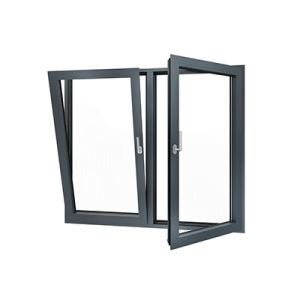
The mechanism is elegantly simple to operate, even if the engineering behind it is sophisticated.
Tilt mode – turn the handle 90 degrees and the top of the window tilts inward by approximately 10–15 cm. This creates a controlled, secure gap for continuous background ventilation. The sash remains locked at the bottom and sides, meaning the window cannot be forced open from outside – making it ideal for night ventilation, ground floors, bathrooms and basement rooms where security and privacy matter.
Turn mode – turn the handle 180 degrees and the entire sash swings fully inward on side hinges, like a door opening into the room. This allows complete, unrestricted access to both faces of the glass for cleaning, provides maximum ventilation, and creates a large emergency escape route where required.
A single handle controls both functions sequentially, and a mechanical interlock within the hardware prevents the window from being operated incorrectly.
Types of tilt and turn windows
We work with leading manufacturers to supply a full range of tilt and turn configurations for London homes and developments:
-
Standard tilt and turn windows
Single sash with dual-action mechanism. The most widely specified format, available in a full range of sizes and suited to most residential and commercial positions.
-
Tilt-only windows
Fixed in tilt position for positions where full inward opening is not required or desired, such as above kitchen worktops or where furniture restricts the swing path.
-
Large format tilt and turn windows
Because the hinge system carries more of the sash weight than a casement hinge, tilt and turn windows can be manufactured in larger formats than a standard side-hung casement, offering expansive uninterrupted panes of glass.
-
Tilt and turn with fixed light
A fixed non-opening panel combined with a tilt and turn sash in a single frame, maximising glass area whilst maintaining ventilation and cleaning access.
-
Aluminium sash windows
Slim, contemporary aluminium windows sash designs for modern builds and renovations where a clean, low-maintenance finish is preferred.
The brands we work with





Benefits of tilt and turn windows
Tilt and turn windows offer a distinct set of practical advantages that few other window types can match:
-
Secure ventilation day and night
Tilt mode allows continuous airflow whilst keeping the multi-point locking system engaged. The narrow tilt gap prevents unauthorised entry, making it safe to leave windows open on ground floors, upper floors and in bedrooms overnight.
-
Safe and easy cleaning from inside
The full inward turn brings both faces of the glass within easy reach from inside the room. No ladders, no leaning out, no specialist cleaning services needed. Particularly valuable on upper floors, apartments and London terraces where external access is restricted.
-
Outstanding energy efficiency
Multi-chamber aluminium frames with polyamide thermal breaks, combined with double or triple glazing, allow tilt and turn windows to achieve excellent thermal performance comfortably within current Part L building regulations.
-
Excellent security
All systems we supply can be specified to PAS 24 security standards. The multi-point locking mechanism secures the sash at several points around the frame, and tilt mode provides ventilation without any point of entry accessible from outside.
-
Child safety
Tilt mode limits the opening to a narrow gap that children and pets cannot climb through, making it a reassuring choice for upper-floor bedrooms, playrooms and family homes.
-
Large, unobstructed panes
Because the tilt and turn mechanism distributes the sash load differently to a casement hinge, larger sashes can be specified, maximising light and views.
-
Emergency escape
Turn mode creates a large, unobstructed opening that meets current building regulation requirements for escape windows in habitable rooms.
-
Low maintenance
Aluminium tilt and turn windows require minimal upkeep beyond occasional cleaning, and the inward-opening design means both glass faces can be maintained without any external access.
When tilt and turn windows are the right choice
Tilt and turn windows are particularly well-suited to:
Flats, apartments, and high-rise buildings – where external window cleaning is impractical, access is restricted, and safe ventilation without outward projection is essential. One of the most widely specified window types in London apartment buildings is precisely for this reason.
Upper-floor bedrooms and bathrooms – where secure overnight ventilation and easy cleaning without ladders are both priorities.
Basement and ground-floor rooms – where tilt mode delivers ventilation without the security risks of a fully open outward casement.
Contemporary new builds and extensions – where the clean lines, slim aluminium frames and large glass areas of a tilt and turn complement modern architecture.
Rooms with restricted external clearance – where an outward-opening casement would project into a narrow passageway, over a patio, or close to a boundary.
Passivhaus and low-energy projects – where the combination of triple glazing and thermally broken aluminium frames helps achieve demanding U-value targets.
Commercial and residential developments – where a consistent, practical and safe window specification is required across multiple units or floors.
Available in a range of materials
-
Aluminium tilt and turn windows
The most widely specified option. Thermally broken aluminium frames offer slim sightlines, excellent strength and very low maintenance. Available in a full RAL colour range with powder-coated finishes. Brands we work with include Schüco and Reynaers.
-
Composite tilt and turn windows
Alu-clad systems combining a timber interior with aluminium exterior. Ideal for projects where warmth and character inside the home are important, with the low-maintenance benefits of aluminium facing the weather. Available from Velfac and Rationel.
-
Timber tilt and turn windows
Available for high-specification bespoke residential projects where a full timber interior and exterior are required. Factory finished and available in engineered redwood, Accoya and hardwood.
Finishes, hardware and security
Finishes & colours
Aluminium tilt and turn windows are factory powder-coated across a full RAL colour range, including popular contemporary shades such as anthracite grey, matt black, sage green and bronze, as well as classic white and cream. Dual colour finishes are available, allowing a different shade on the interior and exterior faces. Composite systems offer a full range of timber interior finishes alongside the aluminium exterior colour.
Glazing options
All tilt and turn windows we supply are available with:
Double glazing – the standard choice for most London homes, meeting current Part L building regulation requirements for thermal performance.
Triple glazing – triple glazed window units for positions near busy roads, rail lines or flight paths, or for projects targeting Passivhaus levels of insulation.
Acoustic glass – laminated acoustic units particularly well suited to London’s urban environment, reducing traffic, rail and ambient noise in bedrooms, living rooms and offices.
Hardware & security
The defining feature of a tilt and turn window is its hardware. All systems use a single ergonomic handle to control both tilt and turn functions, with a mechanical interlock preventing incorrect operation. Multi-point locking engages at multiple points around the frame when the window is closed. Additional options include key-lockable handles, child safety restrictors that limit operation to tilt mode only, and night vent positions. All windows can be specified to PAS 24 security standards.
Posted on GoogleTrustindex verifies that the original source of the review is Google. A good and personal service. Linas is approachable and does whatever he can to meet our needs. The fitters are friendly and professionalPosted on GoogleTrustindex verifies that the original source of the review is Google. Linas provided an excellent service from start to finish with the supply and installation of our VELFAC windows. He was professional, knowledgeable and always easy to communicate with. The installation was completed to a very high standard, and we are extremely happy with the final result. Highly recommended!Posted on GoogleTrustindex verifies that the original source of the review is Google. We hired Citi Homes to replace a window with a new door into our garden. The communication was great from the start, their quote was competitive, and they resolved all our queries. They told us what they were going to do, when, and then they delivered exactly what we agreed on time. Their team was very professional and hard working. We are very pleased with the result and how Citi Homes conducted themselves. I'm saving their number for any future works we might have to do, as I've had plenty of bad experiences with bad contractors before... it's a pleasure when you finally find someone that knows their trade, are proud of their work and accountable.Posted on GoogleTrustindex verifies that the original source of the review is Google. Did a great job installing and making good, very clear about timelines and what was going to happen, would recommendPosted on GoogleTrustindex verifies that the original source of the review is Google. Very happy with the service provided from Linas and his team at Citi Homes Windows. We had to replace 3 fire damaged Velfac windows over 22 years old , it was a challenge getting all the right specifications but from enquiry to ordering, and shipping the whole process was made easy because of their professionalism, I would definitely recommend Citi Homes Windows
FAQ
Yes – they are one of the most widely specified window types for London apartment buildings and high-rise developments. The inward-opening mechanism means no external access is needed for cleaning or maintenance, and tilt mode provides safe, secure ventilation on any floor level.
Generally not on principal or street-facing elevations. Their contemporary European profile does not suit the character of Georgian, Victorian or Edwardian properties, and planning authorities in London's conservation areas are unlikely to grant approval. On rear or side elevations of non-listed properties, they may be acceptable. We always recommend checking with your local planning authority before specifying.
No – in aluminium, tilt and turn windows require very little maintenance. The mechanism should be inspected periodically and lubricated if needed, but the inward-opening design means both glass faces can be cleaned easily from inside, reducing the need for external maintenance visits entirely.
Yes, typically around 20–30% more than a standard outward-opening casement window of the same size, owing to the more complex dual-action hardware. However, the added functionality – safe cleaning, secure ventilation, emergency escape compliance and enhanced security – makes them a cost-effective choice for upper-floor and apartment positions where those features have real practical value.
Quality aluminium tilt and turn windows typically last 40 years or more. The mechanism is built for long-term use, though hardware components may require servicing or replacement over time like any moving part. All windows we supply come with a manufacturer's warranty for added peace of mind.
Yes. One of the advantages of the tilt and turn mechanism is that it can support larger, heavier sashes than a standard casement hinge, making it well suited to large-format glazing in contemporary extensions and apartment buildings.