- +44 20 80 88 58 88
- info@citihomeswindows.co.uk
- Unit 3, Alpine Business Center, Eastbury Road, London E6 6LP

Menu
Security doors
Steel and aluminium security doors.
A security door is an engineered product – independently tested against specific attack methods, certified to a published standard, and installed with a frame and hardware system that performs as a unit. It gives you a front or back door you can rely on, backed by independent certification.
What is a security door?
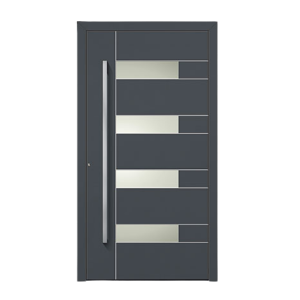
A security door is an external door that has been independently tested and certified to a recognised security standard. Testing is carried out by an approved body against a defined set of methods – physical force, tool resistance, and glazing performance.
In the UK, the two most relevant standards are PAS 24 and the European RC rating system (RC2–RC6). Both assess door performance under controlled test conditions, but they are structured differently and used in different contexts.
Security door standards explained
PAS 24 - the UK residential standard
PAS 24 (Publicly Available Specification 24) is the British security standard for doors and windows. The current version is PAS 24:2022, developed by the British Standards Institution. It tests a door against common burglary methods: manual attack with a chisel or knife, mechanical loading, impact, and glazing attack. The door either passes or fails; there are no grades under PAS 24.
PAS 24 is required under the current Building Regulations (Approved Document Q) for all new dwellings in England. It is also the minimum standard for Secured by Design certification.
Secured by Design - the police-backed standard
Secured by Design (SBD) is a UK police initiative that recognises products meeting specific security requirements. To achieve SBD certification, a door must first pass PAS 24 testing. SBD approval is recognised by insurers, local authorities, and developers.
RC ratings - the European scale
RC stands for Resistance Class. The RC rating system (EN 1627) is a European standard that grades doors on a scale from RC1 to RC6 based on how long they resist attack with increasingly sophisticated tools.
RC ratings run from RC1 (basic physical force) to RC6 (specialist government-level). For most London homes, RC2 is the standard; RC3 is worth specifying for higher-risk properties.
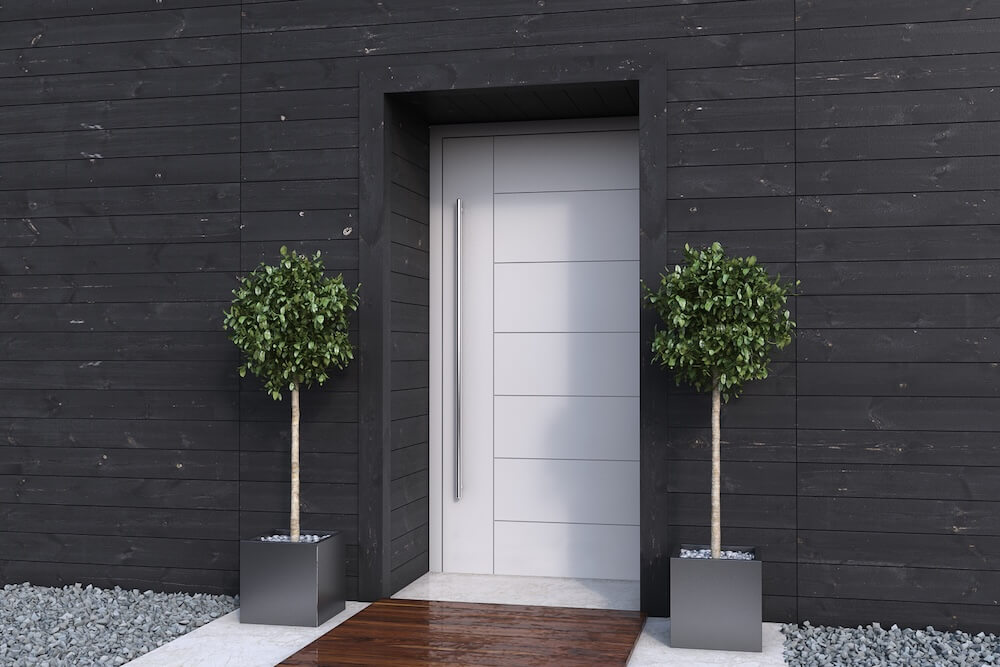
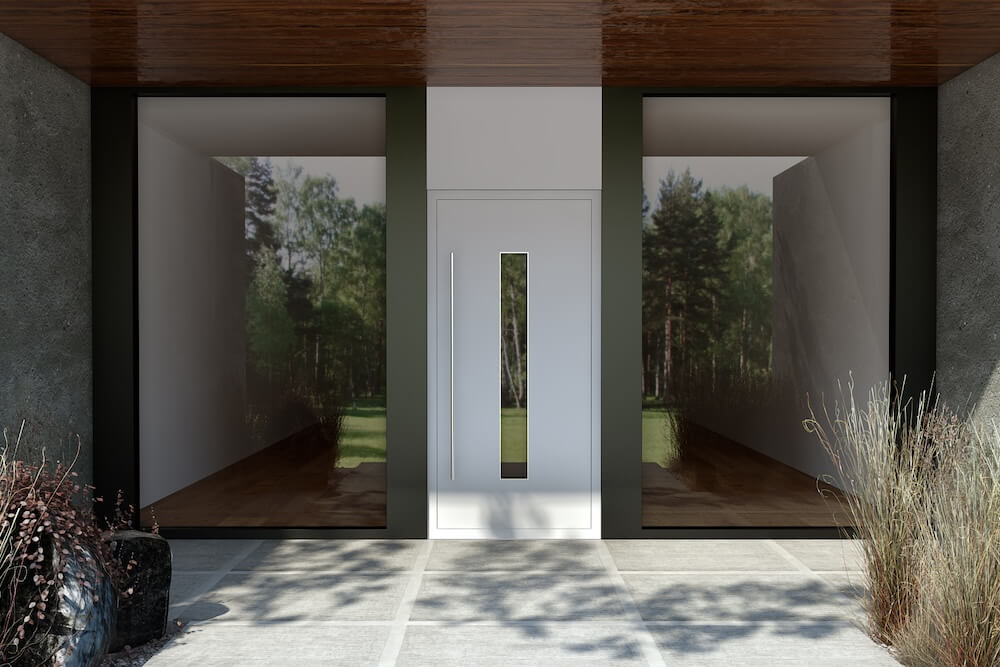
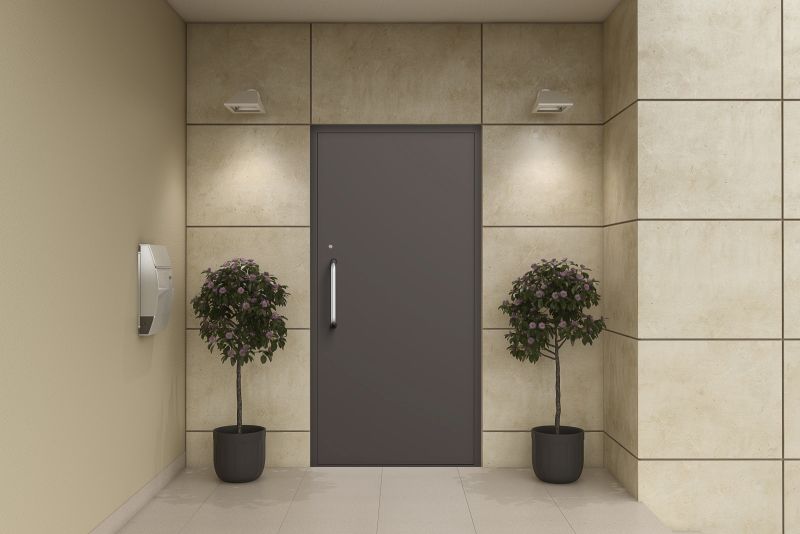
Types of security doors
Steel security doors
Steel is the strongest material available for a residential or commercial security door. A 44mm steel door leaf with a reinforced steel frame is significantly harder to breach than any composite or aluminium alternative. Steel security doors are available with:
Multipoint locking with 11+ shoot bolts and 4-way locking
Cylinder defenders to prevent lock tampering
PAS 24:2022 and Secured by Design certification
Fire ratings up to E120 (120 minutes)
Acoustic ratings up to 39dB
U-values as low as 1.5 W/m²K with insulated core
RC2 to RC4 certification depending on specification
Steel security doors are available as single or double leaf, inward or outward opening, glazed, part-glazed or fully solid. Standard sizes up to 1,300mm wide and 2,250mm high on a single leaf; double leaf up to 2,490mm wide.
Aluminium security doors
High-specification aluminium entrance doors – particularly from Schüco, Reynaers and ALUK – can be specified to PAS 24 and Secured by Design standard. An aluminium security door offers the look and finish of a premium contemporary entrance door with certified security performance. PAS 24 certified aluminium doors use multipoint locking, anti-drill lock cylinders, toughened or laminated glazing and reinforced frames. They are available in any RAL colour, with dual-colour options, sidelights and fanlights.
Aluminium security doors are the right choice when the brief is both security performance and front door aesthetics — a premium entrance door that happens to be certified secure.
Composite security front doors
Most quality composite doors from established UK manufacturers are PAS 24 certified. A composite door with PAS 24 certification and Secured by Design approval gives strong residential security performance at a more accessible price than steel or premium aluminium. GRP skin, solid foam core, multipoint locking, anti-snap anti-drill cylinder as standard. The most practical security upgrade for most London front and back doors.
What makes a security door secure?
The door leaf is only part of it. A security door performs as a system — door, frame, locks, hinges and glazing all need to meet the standard together.
-
The frame
Steel security door frames are welded steel with expansion adjusters that fill the structural opening tightly. Aluminium frames are heavy-section with reinforced steel inserts at lock and hinge points.
-
The lock
Multipoint locking is standard. Look for locks with anti-snap, anti-drill and anti-pick cylinders. A 3-star British Standard Kitemark barrel (TS007) is the benchmark for residential cylinders.
-
The hinges
Security-grade hinges are load-bearing, anti-lift and resistant to attack from the hinge side. Concealed hinges are available on most aluminium systems.
-
The glazing
Any glazed panel in or adjacent to the door needs to be laminated or toughened safety glass. PAS 24 testing includes glazing attack — a certified door has been tested as a complete unit including its glass.
-
The threshold
The gap at the bottom of the door is a vulnerability. Security door thresholds are designed to close that gap without creating a trip hazard.
Smart access and keyless entry
Most modern security doors can be specified with smart locking options alongside the mechanical security system:
-
Digital keypads - code-based entry, no physical key
-
Bluetooth and app control - lock and unlock remotely, grant access to specific people, check status
-
Fingerprint access - biometric, no key required
-
Video doorbell integration - see who is at the door from anywhere
Smart access features are an addition to the mechanical security system, not a replacement for it. A door with a smart lock and no PAS 24 certification is not a security door.
The brands we work with







Posted on GoogleTrustindex verifies that the original source of the review is Google. A good and personal service. Linas is approachable and does whatever he can to meet our needs. The fitters are friendly and professionalPosted on GoogleTrustindex verifies that the original source of the review is Google. Linas provided an excellent service from start to finish with the supply and installation of our VELFAC windows. He was professional, knowledgeable and always easy to communicate with. The installation was completed to a very high standard, and we are extremely happy with the final result. Highly recommended!Posted on GoogleTrustindex verifies that the original source of the review is Google. We hired Citi Homes to replace a window with a new door into our garden. The communication was great from the start, their quote was competitive, and they resolved all our queries. They told us what they were going to do, when, and then they delivered exactly what we agreed on time. Their team was very professional and hard working. We are very pleased with the result and how Citi Homes conducted themselves. I'm saving their number for any future works we might have to do, as I've had plenty of bad experiences with bad contractors before... it's a pleasure when you finally find someone that knows their trade, are proud of their work and accountable.Posted on GoogleTrustindex verifies that the original source of the review is Google. Did a great job installing and making good, very clear about timelines and what was going to happen, would recommendPosted on GoogleTrustindex verifies that the original source of the review is Google. Very happy with the service provided from Linas and his team at Citi Homes Windows. We had to replace 3 fire damaged Velfac windows over 22 years old , it was a challenge getting all the right specifications but from enquiry to ordering, and shipping the whole process was made easy because of their professionalism, I would definitely recommend Citi Homes Windows
FAQ
A security door is an external door independently tested and certified to a recognised security standard. It performs as a complete system - door leaf, frame, locks, hinges and glazing - all tested together. Certification comes from an independent testing body, not the manufacturer.
PAS 24 is the British security standard for doors and windows, developed by the British Standards Institution. A PAS 24 certified door has been tested against common burglary methods - chisel attack, mechanical loading, impact, glazing attack - and passed. It is required under Building Regulations for all new dwellings in England.
PAS 24 is the technical testing standard. Secured by Design is a police-backed certification scheme. To achieve Secured by Design approval, a door must first pass PAS 24 testing. They work together - PAS 24 is the test, Secured by Design is the recognition.
RC ratings are a European security grading system (EN 1627). RC2 resists attack with basic hand tools for a minimum of 3 minutes - the standard for most UK residential doors. RC3 resists more advanced tools including crowbars for a minimum of 5 minutes. RC3 is appropriate for higher-risk London properties or where the client wants a higher margin of security.
A quality composite door with PAS 24 certification and Secured by Design approval is a security-rated residential door. It provides strong protection against opportunistic and semi-determined attack and is the standard specification for most UK new builds and renovations.
A welded steel security door with RC3 certification, multipoint locking with 11+ shoot bolts, a cylinder defender and a reinforced steel frame is the highest level of security available for a residential property in the UK.
No. Aluminium security doors from Schüco, Reynaers and ALUK are indistinguishable from any other premium entrance door in terms of appearance. Composite security doors come in a wide range of styles and colours. Even steel security doors are available in full RAL colour ranges with contemporary designs.