- +44 20 80 88 58 88
- info@citihomeswindows.co.uk
- Unit 3, Alpine Business Center, Eastbury Road, London E6 6LP

Menu
Composite doors
Composite doors are the most widely installed front door type in the UK. They hold their shape, hold their colour, and require almost no maintenance. A good composite door looks like timber, performs better than timber, and will still be working reliably in thirty years without a single coat of paint.
What is a composite door?
A composite door is built from several materials bonded together. The construction typically consists of a solid timber or high-density foam core, a GRP (glass reinforced plastic) or ABS outer skin, a timber sub-frame, and a reinforced lock block. Each material is chosen for what it does best: the core provides rigidity and insulation, the outer skin provides weather resistance and appearance, and the frame provides structural integrity.
The result is a door that is heavier and more solid-feeling than a standard uPVC door, more dimensionally stable than timber, and considerably more durable than either in everyday use. A quality composite door slab is typically 44–48mm thick – noticeably more substantial than a standard door.
Composite door construction
Two main construction types are used across the UK composite door market. The choice affects how the door feels, performs, and ages.
-
GRP foam core doors
A high-density polyurethane foam core bonded between two GRP skins and set within a reinforced frame. Excellent thermal efficiency - the foam core is a strong insulator. Lighter than a solid timber core door. The most widely produced composite door type in the UK.
-
Solid timber core doors
Engineered hardwood or cross-laminated veneer lumber (LVL) core, typically 48mm thick, finished with GRP or ABS skins. Heavier and more solid-feeling than a foam core door. 10% thicker than the standard foam core slab. Preferred by homeowners who want a door that feels truly substantial and close to solid timber.
Composite door styles
Composite doors are available in a wide range of panel designs, glass options, and hardware configurations. The most popular styles we install across London:
Most common composite installations are available in contemporary or traditional panel designs with a full range of glazing, hardware, and colour options.
Composite sliding door systems that track horizontally, suited to rear garden access where an outward swing is not practical.
Composite bifold configurations that fold and stack to one or both sides, opening up a wide, clear aperture between the house and garden.
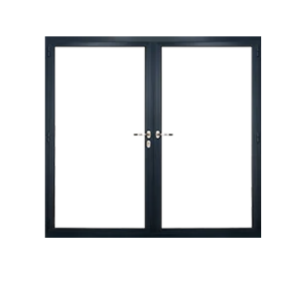
Two-leaf composite door sets opening outward from a central meeting point. A traditional choice for garden access and rear extensions.
Composite patio door sets with large glazed panels, suited to rear garden access, and bringing natural light into the living space.
Looking for something else? Please get in touch with us.
Security, colour and finish, and glass designs
Security
All composite doors we install are PAS 24 certified and meet Approved Document Q building regulations as standard. A PAS 24-certified composite door has been tested against common forced-entry methods, chisel attack, mechanical loading, and glazing attack, and passed.
Standard security specification includes:
Multipoint locking with a minimum of three locking points
Anti-snap, anti-drill, anti-pick cylinder – 3-star British Standard Kitemark (TS007) as standard
Reinforced lock block within the door slab
Toughened or laminated safety glazing in all glass panels
Secured by Design certification available on most ranges
Colour and finish
Composite doors are available in a wide range of colours – standard RAL colours, heritage shades, and dark tones are all popular in London. Most manufacturers offer dual-colour doors – a different colour on the inside face from the outside – so the door suits both the exterior of the house and the interior hallway.
Popular exterior colours in London: anthracite grey, black, Chartwell green, French grey, cream, red, and blue. The GRP or ABS outer skin holds its colour without fading, peeling, or chalking.
Glass designs
The glazed panel – if the door has one – is a significant part of how the door looks. Options range from clear double glazed units to decorative leaded or bevelled glass, sandblasted privacy glass, and contemporary frosted designs.
All glazed panels in PAS 24 certified doors use toughened or laminated safety glass as standard. Obscure glass is available for doors on busy streets or side returns where privacy is needed.
FAQ
A composite door is built from several materials bonded together - typically a solid timber or high-density foam core, a GRP or ABS outer skin and a reinforced timber sub-frame. Each material is chosen for a specific purpose: insulation, weather resistance, structural rigidity and security.
A foam core door uses high-density polyurethane insulation between two GRP skins - excellent thermal performance and lighter in weight. A solid timber core door uses engineered hardwood or LVL - heavier, more solid-feeling and typically 48mm thick. Both are PAS 24 certified. The solid timber core door feels closer to a real timber door underfoot and is the preferred choice at the premium end of the residential market.
All composite doors we install are PAS 24 certified with multipoint locking, a 3-star British Standard Kitemark anti-snap cylinder and toughened safety glazing. Secured by Design certification is available on most ranges.
Quality composite doors do not fade, warp or peel. The GRP or ABS outer skin holds its colour without painting. Dimensional stability is one of the main practical advantages over solid timber.
A wide range of RAL and heritage colours in gloss, matt and woodgrain-effect finishes. Most manufacturers offer dual-colour - different inside and out. Anthracite grey, black, chartwell green and French grey are currently the most popular choices in London.
Yes. Bespoke composite doors are available for non-standard sizes. We measure at survey and confirm what is achievable within the range we work with.
A quality composite door has a typical lifespan of 35 years or more with no maintenance beyond cleaning. The GRP outer skin, multipoint locking and timber frame all contribute to its long-term durability.
Most composite door installations take three to five hours. The door is fully operational on the day of installation.