- +44 20 80 88 58 88
- info@citihomeswindows.co.uk
- Unit 3, Alpine Business Center, Eastbury Road, London E6 6LP

Menu
Pivot door
A pivot door is one of the first things visitors notice about a house. It is wider than a standard front door, sits flush with the facade, and opens with a smooth, effortless sweep. There are no visible hinges. No frame to look at. Just the door.
They are used almost exclusively as front doors – occasionally as rear patio doors or internal screens – and they suit contemporary new builds, high-spec renovations, and any property where the entrance is meant to say something about the building behind it.
What is a pivot door?
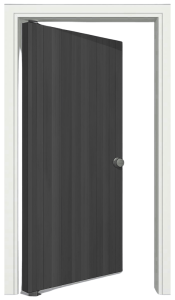
A pivot door rotates on a vertical axis set into the floor and ceiling (or head of the frame), rather than being hung on side-mounted hinges. The pivot point sits inward from the edge of the door – typically 100–300mm from one side – which means the door swings open on that offset point, with a small counterbalancing tail moving in the opposite direction.
This mechanism allows pivot doors to be made considerably larger and heavier than a conventional hinged door. Standard hinged doors are limited by what a side hinge can carry. A pivot door with a FritsJurgens system can handle panels up to 500kg. Heights of 2.7-4 metres and widths above 1.5 metres are practical and common on high-spec London projects.
The pivot hardware is concealed inside the door – there is no floor box, no visible mechanism. The door simply rotates. That clean, minimal result is what drives demand for them.
How pivot doors differ from other door types
Pivot doors vs hinged front doors
A standard front door hangs on two or three hinges fixed to the side of the frame. Width and weight are limited by what those hinges can carry – typically a maximum panel of around 900mm wide and 2.1 metres tall. A pivot door has no such limitation. It can be floor-to-ceiling, over a metre wide, and as heavy as the brief requires. The visual result is entirely different – a pivot door fills the opening rather than sitting within it.
Pivot doors vs composite front doors
Composite doors are the standard choice for UK front doors – strong, thermally efficient, secure, and available in a wide range of styles. A pivot door is a bespoke architectural product. It costs more, takes longer to make, and requires more careful installation. The right choice depends entirely on the brief. For a standard terrace or semi-detached house, a composite front door is almost always the more practical answer. For a new build, a significant renovation, or a property where the entrance is an architectural feature, a pivot door is worth the investment.
Pivot doors vs sliding doors
Sliding doors run on a track and are used almost exclusively as rear patio doors. Pivot doors rotate on a vertical axis and are used almost exclusively as front entrance doors or internal architectural features. They are not comparable products – they serve different purposes.
Centre pivot vs offset pivot
There are two pivot configurations. The choice affects how the door looks and how it moves. For most residential front door applications, an offset pivot gives the most practical and visually balanced result.
The pivot point sits around 100–300mm from one side of the door. The door opens like a conventional door from a user perspective, with the main leaf swinging away and a small counterbalancing tail moving in the opposite direction. This is the most common configuration for residential front doors.
The pivot point sits in the middle of the door width. Both halves of the door swing in opposite directions equally. The effect is sculptural and symmetrical. Used on wider, statement entrance doors and internal architectural screens.
Materials — aluminium, timber, and steel
-
Aluminium pivot doors
Aluminium is the most popular material for pivot doors in the UK. It is strong enough to carry large, heavy panels without the door sagging or twisting over time. Thermally broken aluminium pivot doors are double or triple glazed as standard, meeting current building regulations comfortably. Powder-coat finish in any RAL colour. Low maintenance. Available fully glazed, part-glazed or solid-panelled with inset materials (timber, stone, composite cladding).
-
Timber pivot doors
Solid hardwood or engineered timber pivot doors bring warmth and natural character to a front entrance. Bespoke timber pivot doors can be factory-finished in any paint colour or stain and fitted with concealed pivot hardware. They suit period properties, rural settings and projects where the natural material of the door is part of the design intent. Timber requires more maintenance than aluminium - repainting every five to ten years depending on exposure and finish.
-
Steel pivot doors
Steel pivot doors are the strongest option - steel is approximately three times stronger than aluminium by cross-section. They are used on high-security residential entrances, villa front doors and commercial projects where both visual weight and structural performance matter. Steel pivot doors can achieve fire ratings up to 120 minutes and carry security levels up to RC3 or higher. They are heavier, more expensive and have longer lead times than aluminium. FritsJurgens pivot hardware supports panels up to 500kg, making even large steel pivot doors operable with one hand.
The FritsJurgens pivot system
-
FritsJurgens
FritsJurgens is the industry standard pivot hinge system for high-specification residential and commercial doors in the UK. The mechanism is mortised into the floor and the top of the door - completely concealed, no floor box required. It handles doors from 20kg to 500kg across its product range. The system is spring-loaded so the door returns to the closed position naturally, and the closing speed and tension can be adjusted. Available for aluminium, timber and steel pivot doors.
The brands we work with







Posted on GoogleTrustindex verifies that the original source of the review is Google. We hired Citi Homes to replace a window with a new door into our garden. The communication was great from the start, their quote was competitive, and they resolved all our queries. They told us what they were going to do, when, and then they delivered exactly what we agreed on time. Their team was very professional and hard working. We are very pleased with the result and how Citi Homes conducted themselves. I'm saving their number for any future works we might have to do, as I've had plenty of bad experiences with bad contractors before... it's a pleasure when you finally find someone that knows their trade, are proud of their work and accountable.Posted on GoogleTrustindex verifies that the original source of the review is Google. Did a great job installing and making good, very clear about timelines and what was going to happen, would recommendPosted on GoogleTrustindex verifies that the original source of the review is Google. Very happy with the service provided from Linas and his team at Citi Homes Windows. We had to replace 3 fire damaged Velfac windows over 22 years old , it was a challenge getting all the right specifications but from enquiry to ordering, and shipping the whole process was made easy because of their professionalism, I would definitely recommend Citi Homes WindowsPosted on GoogleTrustindex verifies that the original source of the review is Google. Linus and his team were excellent. No problem recommending them, they were nice people, clear, easy to deal with, patient with the process throughout and finished everything to a very high standard. They steered us through informatively from start to finish and also tidied up after themselves each evening which we really appreciated.Posted on GoogleTrustindex verifies that the original source of the review is Google. We ordered a number of Velfac windows and doors for supply + installation through Citi Homes Windows. The service was excellent from start to finish - very good communication through the design process and we've been very happy with the installation as well. Linas in particular was a star - super responsive, patient as we made changes, and a pleasure to work with. Highly recommend.Posted on GoogleTrustindex verifies that the original source of the review is Google. Outstanding service from start to finish. Linas and teams' clear communication and happy to help support throughout, made our windows and back door installation completely stress-free. Even had a site visit post-installation to check we were entirely satisfied with the works and service...which we are. Highly recommend. Many thanksPosted on GoogleTrustindex verifies that the original source of the review is Google. This is a very special building company. I've worked in housing for 30 years and everything I experienced about Citi Homes is best in class. From first contact, communication was quick, clear and high quality. Quotes arrived quickly with high quality cad drawings. Once the detailed design was agreed, a delivery and installation date was agreed and then met. The operatives who fitted all eight windows in two days (bearing in mind the new windows were a completely different design to the ones removed) were polite, extremely conscientious about minimising any damage, very professional, clean and tidy. The result is a great product, perfectly and quickly installed. I have been recommending this company to friends and colleagues. If you need new high quality windows, at a highly competitive price, look no further. I would always recommend getting two or three estimates, but I honestly think that would be for reassurance rather than as a serious competitor to Citi Homes.Posted on GoogleTrustindex verifies that the original source of the review is Google. Citi Homes supplied new Rationel windows for our loft conversion. Great service throughout - good support through the quotation / ordering process and excellent communication on delivery times etc once the order was placed.Posted on GoogleTrustindex verifies that the original source of the review is Google. Citi replaced my damaged Velfac balcony door: Great communication from Linas who managed to source a replacement from the manufacturers, even though the door is no longer produced. The install team also did a great job delivering and troubleshooting on site to ensure the door was replaced and now fully usable. Highly recommend.Posted on GoogleTrustindex verifies that the original source of the review is Google. Citi supplied a very large (2 metres X 2 metres) window to replace one that had shattered. The job involved craning the new unit up to our fourth-floor terrace and fixing it in position. Citi found a very good crane company to do the lift and dealt with our local council to get the necessary license to close the street during the work. We found Linas, the Citi manager who ran our job, to be very professional and easy to work with.
Design options
Size
Pvot doors can be made to almost any size. Heights from 2.1 metres to 4 metres are achievable. Widths from 900mm to 1,800mm are common. Oversized bespoke formats are available on request.
Glazing
Fully glazed (floor-to-ceiling glass within the door panel), part-glazed (solid lower section with glazed upper), or fully solid. Double glazing standard on external doors; triple glazing available on premium specifications.
Colours
Any RAL or BS colour in gloss, matt, or textured powder-coat on aluminium. Dual-colour available. Natural timber and stained finishes on timber and steel doors.
Handles
Recessed pull handles, through-bar handles, flush pulls, and statement architectural hardware. The handle choice significantly affects the final appearance of a pivot door.
Sidelights and fanlights
A pivot door is often specified alongside fixed glazed side panels or a glazed fanlight above to increase light into the hallway and frame the door architecturally.
Security
Multipoint locking, grade-7 security locks, and 3-way locking are available. PAS 24 certified hardware on aluminium systems.
FAQ
A pivot door rotates on a vertical axis set into the floor and ceiling of the frame, rather than hanging from side-mounted hinges. The pivot point sits inward from the edge of the door, allowing the door to swing smoothly on that offset point. Pivot hardware is concealed - there are no visible hinges.
An offset pivot sits 100-300mm from one side of the door - the door opens conventionally, with a small tail counterbalancing on the other side. A centre pivot sits in the middle - both halves swing equally in opposite directions. Offset pivot is most common for residential front doors.
Considerably larger than a standard hinged door. Heights of 2.7-4 metres and widths up to 1,800mm are practical. Panel weights up to 500kg are achievable with a FritsJurgens system. For most London residential projects, a height of 2.4-3 metres and a width of 1-1.4 metres is the most common specification.
Yes. Aluminium pivot doors are fitted with multipoint locking and PAS 24 certified hardware. Steel pivot doors can achieve higher security ratings including RC3 and fire resistance up to 120 minutes.
Replacing an existing front door with a pivot door does not normally require planning permission on most properties. Conservation area or listed building constraints may apply. We advise on this at survey.
Most pivot door installations take one to two days, depending on any structural preparation required at the head and threshold.